
You bite into something cold. There it is, a quick zing in one of your back teeth. You run your tongue over the spot and feel a small rough patch. A cavity? Maybe. And then you think: Do I really need to call the dentist? Maybe it will just go away on its own.
It’s a common hope. After all, small cuts on your skin heal. Bruises fade. Why wouldn’t a tiny spot of tooth decay do the same? But a cavity is different than a cut or bruise. And potential treatment depends on how far the decay has gone.
How Cavities Work
Your teeth aren’t like bones or skin. Enamel, the hard outer layer, does not have living cells that can regenerate once they’re gone. But decay doesn’t start as a hole. It starts as something called demineralization.
Think of your enamel as a wall made of tightly packed minerals. Every time you eat or drink something sugary or starchy, bacteria in your mouth produce acid. That acid pulls minerals out of the enamel, weakening it. When a cavity starts to form, you won’t feel any pain. You might not even see anything unusual.
The Early Stage: When Healing Is Possible
At this stage, the process could be stopped and even reversed. Saliva contains minerals like calcium and phosphate. Fluoride, from toothpaste, mouthwash, or tap water, helps draw those minerals back into the enamel. That’s called remineralization. With better brushing, less snacking, and a little help from fluoride, a very early spot of decay could harden back up. No drill. No filling. And no numbing.
Once a Cavity Forms, It’s There to Stay
But here’s the line you cannot uncross. Once that weakened spot breaks down and becomes a physical hole, a true cavity, the enamel cannot grow back. Skin heals. Bone remodels. Enamel doesn’t.
From that point on, the cavity will only get bigger. Bacteria will keep tunneling deeper, past the enamel and into the softer layer underneath called dentin. That’s usually when you start feeling sensitivity to cold, sweet, or hot things. If it reaches the inner pulp where the nerve lives, you’re looking at serious pain and possibly a root canal or an extraction.
Why Accurate Diagnosis Matters
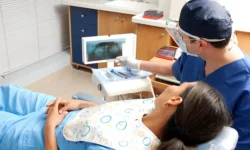
This is where Dr. Marra’s focus on accurate diagnosis makes a real difference. Small spots of demineralization can be hard to see with just an explorer and a mirror. But with high-resolution digital imaging, we can spot trouble early, sometimes before you feel a thing.
When we catch decay at that reversible stage, we can help you remineralize it with fluoride treatments, prescription toothpaste, or changes to your home care routine. No procedure needed. Just monitoring and guidance.
If a cavity has already formed, we’ll talk about a filling. Waiting won’t make it heal. It will only make the filling bigger, or turn it into a crown, a root canal, or worse.
What You Can Do Right Now
You don’t need to guess whether a spot on your tooth is healing or getting worse. That’s what we’re here for. A routine exam gives us a clear picture of what’s happening. If you have a spot that’s still reversible, we could help you save that tooth without drilling. If it’s past that point, we can fix it while the fix is small.
Don’t let the hope of self-healing turn a tiny problem into a major one. Give us a call at (518) 650-1930 or request an appointment online. We’ll take a look, give you an honest answer, and help you keep your smile healthy.